Short answer: It works well for some categories and barely at all for others, and the category matters more than anything you do with the campaign. If your business is visual, discretionary, and worth photographing, it can work very well. If people find you by searching in an emergency, it will not, no matter how good the creator is. Most of the disappointment in this channel comes from businesses in the second group being sold the playbook for the first.
Does influencer marketing work?
Yes, conditionally. Here is the condition.
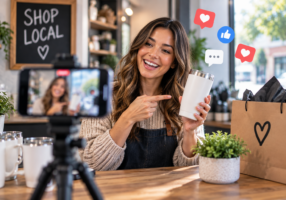
Influencer marketing works when the buying decision is discovery-led. Someone was not looking for you, saw something appealing, and decided they wanted it. Restaurants, coffee shops, boutiques, salons, tattoo studios, med spas, fitness and yoga studios, event venues, and specialty retail all live in this world. People browse, get inspired, and go.
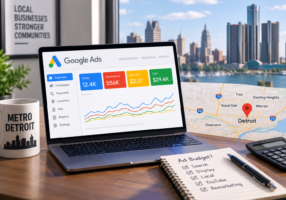
It works badly when the buying decision is search-led. Something broke, something hurts, or something is legally urgent, and the person opens Google. Emergency plumbing, HVAC failures, roof leaks, legal representation, urgent care. Nobody has ever chosen a plumber because of a Reel. For those businesses the money belongs in local SEO, Google Ads, and reviews, and we will say so rather than sell a campaign that cannot work.
Between those poles sits a middle group: dentists, real estate agents, home remodelers, financial advisors. Discovery plays some role, trust plays a bigger one, and influencer work can help at the awareness stage while rarely closing anything on its own.
Why is influencer marketing important for local businesses?
Because it is word of mouth you can schedule.
Local businesses have always run on recommendation. Someone tells a friend about a restaurant, a stylist, a contractor. That has been the dominant acquisition channel for small business forever, and its weakness has always been that you cannot turn it on. It happens when it happens.
An influencer partnership is a recommendation, delivered to a defined audience, at a time you choose. That is genuinely new for a local operator, and it is the honest reason the channel matters rather than anything about reach statistics.
There is a second benefit that gets almost no attention and is frequently worth more than the post itself. You end up with content. Most local businesses have terrible photography, because good photography is expensive and nobody has time. A creator collaboration produces a supply of real images and video of your actual space, food, work, or team, shot by someone who knows how to shoot it. Negotiate usage rights into the agreement and that footage feeds your website, your Google Business Profile, your ads, and your own social for a year. We have seen collaborations where the reach was mediocre and the content library alone justified the cost.
Why is influencer marketing effective?
Three mechanisms, in order of how much they actually matter.
It arrives as a recommendation, not an interruption. People have spent twenty years learning to ignore advertising. They have not learned to ignore a person they chose to follow talking about something they liked. That difference in reception is the whole basis of the channel.
The audience is pre-filtered. A local food creator’s following is disproportionately people who like going out to eat in that area. You are not buying reach, you are buying a specific taste profile that already assembled itself.
The output persists. A paid ad exists while you pay for it. A post, a Reel, and the photography behind it keep existing. This is why we treat influencer work as adjacent to video production rather than as a pure media buy.
All three collapse if the audience is not local. An impressive follower count made up of people two states away is a vanity metric for a business with one location.
Follower count is the wrong number
The most common mistake we see is chasing size.
For a single-location business in Royal Oak or Birmingham, a creator with a few thousand genuinely local followers will usually beat one with a hundred thousand scattered nationally. The second audience mostly cannot visit you. You are paying for reach that has no path to your door.
What to ask for instead, before you agree to anything:
- Audience location breakdown. Every creator can pull this from their own analytics. What percentage is within driving distance of you? If they will not share it or do not know, that is informative.
- Recent engagement, not lifetime averages. Look at the last ten posts. Are people commenting like humans or like bots?
- Whether they have posted about a competitor recently. Not disqualifying, but you should know.
- Saves and shares over likes. A save on a restaurant post is closer to intent than a like. Ask them to screenshot the insights on a comparable past post.
A creator with four thousand followers where seventy percent are in Oakland County is a better buy than forty thousand followers spread across the country, and will usually cost a fraction as much.
What it costs
We are not going to publish a rate card, because local creator pricing is negotiated rather than listed and any number we invented would mislead you.
What we can tell you is how the market actually works. A significant share of local collaborations, particularly in food, beauty, and fitness, run on trade rather than cash, because the product genuinely has value to the creator. Paid arrangements are typically quoted per post or per package, and vary by audience size, production effort, exclusivity, and usage rights. Asking for the right to reuse the footage in your own paid ads will and should increase the price.
The discipline that matters more than the rate: decide what the collaboration is worth to you before you ask what it costs. If your average customer is worth two hundred dollars and you would need six new customers to break even on a given fee, ask yourself honestly whether one post plausibly produces six visits. Sometimes the answer is obviously yes. Often it is not, and the number was never examined.
The disclosure rules are not optional
This gets skipped constantly and it should not be.
In the United States, the Federal Trade Commission requires that endorsements disclose a material connection between the creator and the brand. That includes payment, free product, discounts, and personal or employment relationships. The FTC’s Disclosures 101 for Social Media Influencers is short, plainly written, and worth reading in full before you run anything.
Two points from it that businesses routinely get wrong. The disclosure has to sit with the endorsement, not at the end of a caption, not in a profile bio, and not behind a “more” link. And a creator cannot claim an experience they did not have or praise something they disliked, which means you cannot script enthusiasm.
Responsibility formally sits with the influencer. A brand that instructs a creator to skip disclosure is exposed as well, and more practically, an undisclosed partnership that gets noticed damages exactly the trust you were paying for. Put the requirement in the written agreement.
How to measure it without guessing
The reason so many local businesses believe influencer marketing does not work is that nobody set up a way to tell.
Decide the metric before the campaign, and give it a mechanism:
- A unique code or landing page per creator. The simplest attribution that exists. Redemptions are unambiguous.
- A baseline. Record walk-ins, bookings, direct website traffic, and branded search volume for the two weeks before. Compare the two weeks after. Without a before, the after means nothing.
- Branded search volume. This is the underrated one. Check Google Search Console for searches containing your business name. Influencer work often shows up here first, because people see the post and then look you up rather than clicking through.
- Ask at the point of sale. “How did you hear about us” is unfashionable and still works.
Reach and likes are not results. They are the cost side of the equation described in flattering language.
Where influencer work fits alongside everything else
It should almost never be a standalone channel for a local business. It works best as the top of a funnel that already functions.
Someone sees a Reel about your restaurant. What happens next? They search your name. If your Google Business Profile has current hours, a real menu, recent photos, and a healthy stream of reviews, they book. If it is half built and the most recent review is from 2023, the awareness you just paid for leaks out. That is why we treat listings and reputation as the prerequisite rather than the follow-up.
The same logic applies to the content you gain. The footage from a collaboration should be flowing into your own social channels, your paid video ads, and your website. We wrote about why vertical video in particular has become the default format in short-form video marketing in Metro Detroit.
The honest summary
Influencer marketing is not a growth hack and it is not a scam. It is a distribution method for word of mouth, and like all distribution it only helps if the thing being distributed is worth recommending and the person receiving it can act on it.
Ask three questions before you spend anything. Is my category discovery-led or search-led? Is this creator’s audience actually near me? Have I set up a way to tell whether it worked? If you get a good answer to all three, it is one of the better values available to a local business. If you cannot answer the first one favourably, put the money into search and reviews instead and you will be happier.
For a broader overview of how the channel developed and where it sits in a modern mix, see our earlier piece on the power of influencer marketing, or the influencer marketing service page.
MPH Marketing Solutions is a full-service agency in Berkley, Michigan, working with businesses across Metro Detroit and Michigan. If you want a straight answer on whether influencer marketing fits your category before you spend anything on it, ask us. Sometimes the answer is no, and we would rather tell you that first.